GPT-5 vs Claude 4 in 2026: The Ultimate AI Showdown
GPT-5 vs Claude 4 — the two most powerful AI models compared head-to-head. We test writing, coding, reasoning, multimodal tasks, and more to find which flagship AI wins in 2026.
1X2.TV — AI Football Predictions
AI-powered football match predictions, betting tips, and in-depth analysis. Powered by machine learning algorithms analyzing 50,000+ matches.
Get PredictionsTwo AI labs. Two flagship models. One question: which is better?
OpenAI’s GPT-5 and Anthropic’s Claude 4 represent the current state of the art in large language models. Both are extraordinarily capable, both cost $20/month for consumer access, and both have made claims about surpassing human performance on key benchmarks. But in daily use, they feel meaningfully different.
We’ve spent weeks testing both models across dozens of real-world tasks. Here’s what we found.
At a Glance
| Feature | GPT-5 | Claude 4 (Opus) |
|---|---|---|
| Developer | OpenAI | Anthropic |
| Context Window | 128K tokens | 1M tokens |
| Multimodal | Text, image, audio, video | Text, image |
| Voice Mode | Advanced (real-time) | Limited |
| Web Search | Yes | Yes |
| Image Generation | Yes (DALL-E integration) | No |
| Code Interpreter | Yes | Yes |
| API Access | Yes | Yes |
| Consumer Price | $20/month (Plus) | $20/month (Pro) |
| API Price (input) | ~$10/M tokens | ~$15/M tokens |
| API Price (output) | ~$30/M tokens | ~$75/M tokens |
Writing Quality
This is where the comparison gets most interesting — and most subjective.
GPT-5 writes with remarkable fluency and versatility. It adapts its tone efficiently, handles unusual formats well, and is particularly strong at structured content like reports, proposals, and marketing copy. It tends toward a confident, clear voice.
Claude 4 writes with what we’d describe as more nuance. It captures subtle emotional register more naturally, avoids the slightly mechanical quality that can creep into GPT-5 outputs, and excels at long-form content that needs to maintain a consistent voice over thousands of words. For fiction, personal essays, and content that requires a human touch, Claude 4 consistently produced outputs that felt more polished with less editing.
Winner: Claude 4 for long-form and nuanced writing; GPT-5 for structured business content and rapid iteration.
Sample Test: Product Description
We asked both to write a compelling product description for a premium noise-canceling headphone targeting creative professionals.
GPT-5 produced clean, benefit-forward copy with strong opening hooks. Professional and effective.
Claude 4 produced copy that felt more evocative — it captured the emotional experience of focus and flow in a way that felt less like marketing and more like storytelling.
Coding Ability
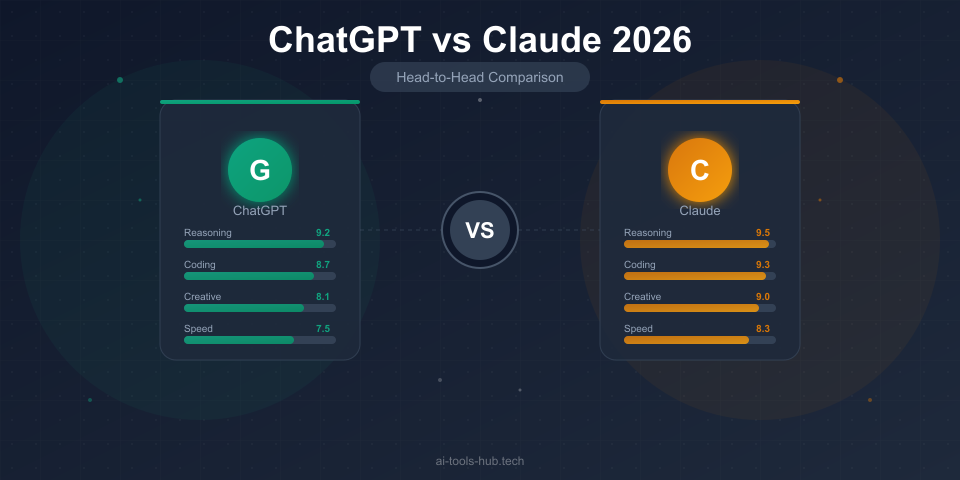
Both models are exceptional coders. The gap has narrowed significantly from even 12 months ago.
GPT-5 edges ahead on breadth: it handles obscure languages and legacy frameworks more reliably, has better memory of specific library APIs, and tends to produce working first-draft code at a higher rate across diverse tasks.
Claude 4 is the choice for code understanding and review. Feed it a 10,000-line codebase and ask it to explain the architecture, find the bug, or refactor a module — it handles the full context window more gracefully. Its explanations of complex code are cleaner and easier to follow.
Winner: GPT-5 for generation across diverse stacks; Claude 4 for code review, explanation, and large-codebase tasks.
Benchmark Results
| Benchmark | GPT-5 | Claude 4 Opus |
|---|---|---|
| HumanEval (Python) | 92.3% | 90.1% |
| SWE-bench Verified | 49.2% | 72.5% |
| MBPP (code problems) | 88.4% | 86.9% |
The SWE-bench result is striking: Claude 4 significantly outperforms GPT-5 on real-world software engineering tasks that involve understanding and modifying existing codebases — reinforcing the pattern we saw in testing.
Reasoning and Problem-Solving
Both models ship with extended thinking / reasoning modes that allow them to “think out loud” before answering complex questions.
GPT-5 with reasoning enabled is exceptional at mathematical problem-solving, formal logic, and structured analytical tasks. It approaches problems systematically and rarely makes careless errors on well-defined problems.
Claude 4 in extended thinking mode shows its strength on ambiguous, real-world problems where the question itself needs to be decomposed. It’s better at flagging when a question contains hidden assumptions, offering multiple framings, and reasoning about uncertainty. For strategic decisions, policy analysis, and any problem without a clean answer, Claude 4 feels more intellectually honest.
Winner: GPT-5 for pure math and formal logic; Claude 4 for complex, ambiguous real-world reasoning.
Multimodal Capabilities
This is the area where GPT-5 has the clearest advantage.
GPT-5 can process text, images, audio, and video — and its voice mode is genuinely impressive. You can have a natural, low-latency spoken conversation with real-time interruptions. It can analyze what it “sees” through your camera, read documents, and describe images in rich detail. The integrated DALL-E image generation means you can go from idea to image without switching tools.
Claude 4 handles text and images only. Its image analysis is excellent — detailed, nuanced, and better than GPT-5 at understanding complex diagrams, charts, and technical drawings. But it cannot process audio or video, has no voice mode worth mentioning, and cannot generate images at all.
Winner: GPT-5 — it’s not close if you need multimodal capabilities beyond vision.
Long-Context Performance
Claude 4’s 1 million token context window (vs GPT-5’s 128K) is a genuine competitive advantage for certain use cases:
- Analyzing an entire codebase at once
- Summarizing a book-length document
- Running complex, multi-document research synthesis
- Maintaining coherence across very long conversations
In our tests, Claude 4 made significantly fewer errors when asked to cross-reference information from different parts of a long document. GPT-5’s performance degraded noticeably toward the end of its context window — a known limitation it shares with most transformer-based models.
Winner: Claude 4 — by a wide margin for tasks requiring very long context.
Instruction Following
Both models are excellent at following detailed, complex instructions. But they fail differently.
GPT-5 tends to over-interpret instructions — it may add helpful extras you didn’t ask for, elaborate beyond the scope of your request, or subtly modify the format you specified. This can be useful (it makes suggestions you didn’t know to make) but also frustrating when you need precise output.
Claude 4 follows instructions more literally and is less likely to go off-script. When you need exact adherence to a format, word count, or structure, Claude 4 is more reliable. It’s also less likely to refuse reasonable requests or add unnecessary caveats.
Winner: Claude 4 for precision; GPT-5 for proactive helpfulness.
Safety and Honesty
Anthropic’s mission is AI safety, and it shows in Claude 4’s behavior.
Claude 4 is more forthcoming about uncertainty, more likely to say “I don’t know” when it doesn’t know, and more willing to push back on prompts it finds problematic. It’s also less prone to confidently hallucinating — when it makes things up (and it does), it often hedges in a way that flags the uncertainty.
GPT-5 can be slightly more confident than the facts warrant. Its hallucination rate has improved dramatically, but it still occasionally states fabrications with the same tone as established facts.
Both models refuse clearly harmful requests. Claude 4 can be somewhat over-cautious on borderline topics; GPT-5 is slightly more permissive.
Winner: Claude 4 on honesty and calibrated uncertainty; this may not matter for all use cases.
Pricing Comparison
Consumer Plans
- ChatGPT Plus (GPT-5 access): $20/month
- Claude Pro (Claude 4 Sonnet + Opus access): $20/month
At $20/month, both offer comparable value. GPT-5 via ChatGPT Plus includes access to DALL-E image generation, voice mode, and memory features. Claude Pro’s main advantage is higher usage limits on the more powerful Opus model.
API Pricing (per million tokens)
| Model | Input | Output |
|---|---|---|
| GPT-5 | ~$10 | ~$30 |
| Claude 4 Opus | ~$15 | ~$75 |
| Claude 4 Sonnet | ~$3 | ~$15 |
| GPT-4o | ~$5 | ~$15 |
GPT-5 is significantly cheaper via API. For high-volume applications, this matters enormously. Claude 4 Sonnet (the mid-tier model) is competitive on price and performs extremely well for most tasks — many developers find it the better value proposition than either flagship.
Winner: GPT-5 for API cost at scale.
Ecosystem and Integrations
GPT-5 benefits from OpenAI’s massive head start in ecosystem development. ChatGPT plugins, the GPT Store, extensive enterprise partnerships, and the OpenAI API’s status as the default integration target for most SaaS tools gives it a significant practical advantage.
Claude 4 via the Anthropic API is rapidly catching up. Major enterprise tools like Salesforce, Notion, and Slack now offer Claude integrations. The Claude API is also the default choice for many startups building safety-critical applications. Claude Code — Anthropic’s terminal-based coding assistant — has become a genuine favorite among developers.
Winner: GPT-5 on ecosystem breadth; closing gap.
Head-to-Head Summary
| Task | Winner |
|---|---|
| Long-form writing | Claude 4 |
| Business/structured writing | GPT-5 |
| Code generation | GPT-5 (slight edge) |
| Code review & large codebases | Claude 4 |
| Math & formal reasoning | GPT-5 |
| Complex real-world reasoning | Claude 4 |
| Image/audio/video processing | GPT-5 |
| Long document analysis | Claude 4 |
| Voice interaction | GPT-5 |
| Image generation | GPT-5 |
| Instruction following (precision) | Claude 4 |
| Honesty & calibration | Claude 4 |
| API pricing | GPT-5 |
| Context window | Claude 4 |
Who Should Use Each
Choose GPT-5 if you:
- Need voice mode or multimodal capabilities (audio, video)
- Want integrated image generation
- Are building high-volume API applications where cost matters
- Need the broadest ecosystem of integrations
- Work heavily with code generation across diverse languages
- Prefer a model that proactively adds value beyond the strict prompt
Choose Claude 4 if you:
- Write long-form content and care deeply about quality
- Need to work with large documents or codebases
- Require precise instruction-following and predictable output
- Value honesty, calibration, and intellectual humility
- Are analyzing documents, reports, or research in depth
- Build applications where safety and reduced hallucination risk matter
Use Both if you:
- Can’t afford to miss anything (the models genuinely complement each other)
- Work on diverse enough tasks that different tools serve different needs
- Want to A/B test AI-generated outputs for quality
The Verdict
There’s no single winner here, and anyone who claims otherwise is oversimplifying.
GPT-5 is the more versatile tool — its multimodal capabilities, voice mode, image generation, and broader ecosystem make it the Swiss Army knife of AI assistants. If you could only pick one, it’s the safer all-around bet for most users.
Claude 4 is the better thinker — it produces higher-quality long-form writing, handles complex reasoning with more nuance, follows instructions more precisely, and manages long contexts more reliably. For knowledge workers who live in text and documents, it’s often the superior daily driver.
The good news: at $20/month each, you don’t have to choose. Many power users subscribe to both and use them based on the task at hand.
Compare other leading AI models: ChatGPT vs Gemini 2 | DeepSeek Review | Best AI Chatbots 2026
AI Stock Predictions — Smart Market Analysis
AI-powered stock market forecasts and technical analysis. Get daily predictions for stocks, ETFs, and crypto with confidence scores and risk metrics.
See Today's PredictionsBuilding or marketing an AI tool?
Get listed, reviewed, or featured on AI Tools Hub — 12-month sponsored placements, multilingual. From $49.
AI Tools Hub Team
Expert AI Tool Reviewers
Our team of AI enthusiasts and technology experts tests and reviews hundreds of AI tools to help you find the perfect solution for your needs. We provide honest, in-depth analysis based on real-world usage.